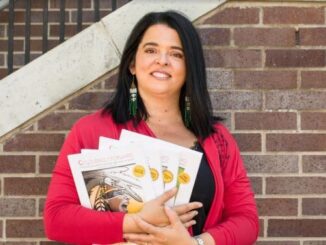
When Black Eco Bloom was founded in 2022, it was born out of a simple but urgent truth: despite being among the communities most severely impacted by climate change, Black women and gender diverse people are routinely excluded from the conversations and decision-making rooms where solutions are shaped. Founded by Leïla Cantave and Tyjana Connolly, and now led by Interim Executive Director Nat Alexander, Black Eco Bloom is a national Black women-led organization working to change that — equipping the next generation of climate and environmental justice leaders with the knowledge, networks, and support they need to drive meaningful change.
Describe your charity/non-profit/volunteer work in a few sentences.
Black Eco Bloom is a national Black women-led organization dedicated to empowering the next generation of climate and environmental justice leaders. We provide essential support and resources to equip individuals with the knowledge, skills, and networks necessary to drive meaningful change in our communities. We also partner with municipalities and climate action and equity-focused organizations to provide a variety of support services.
What problem does it aim to solve?
Our goal is to support the development and leadership of our community members to be environmental and climate justice leaders, while reorienting mainstream environmental and climate narratives to be inclusive of Black voices, experiences and needs.
We put special emphasis on Black women or gender diverse folks who face barriers accessing conferences, decision-making rooms and networking opportunities. We provide information on green careers, pathways to green jobs and education.
When did you start/join it?
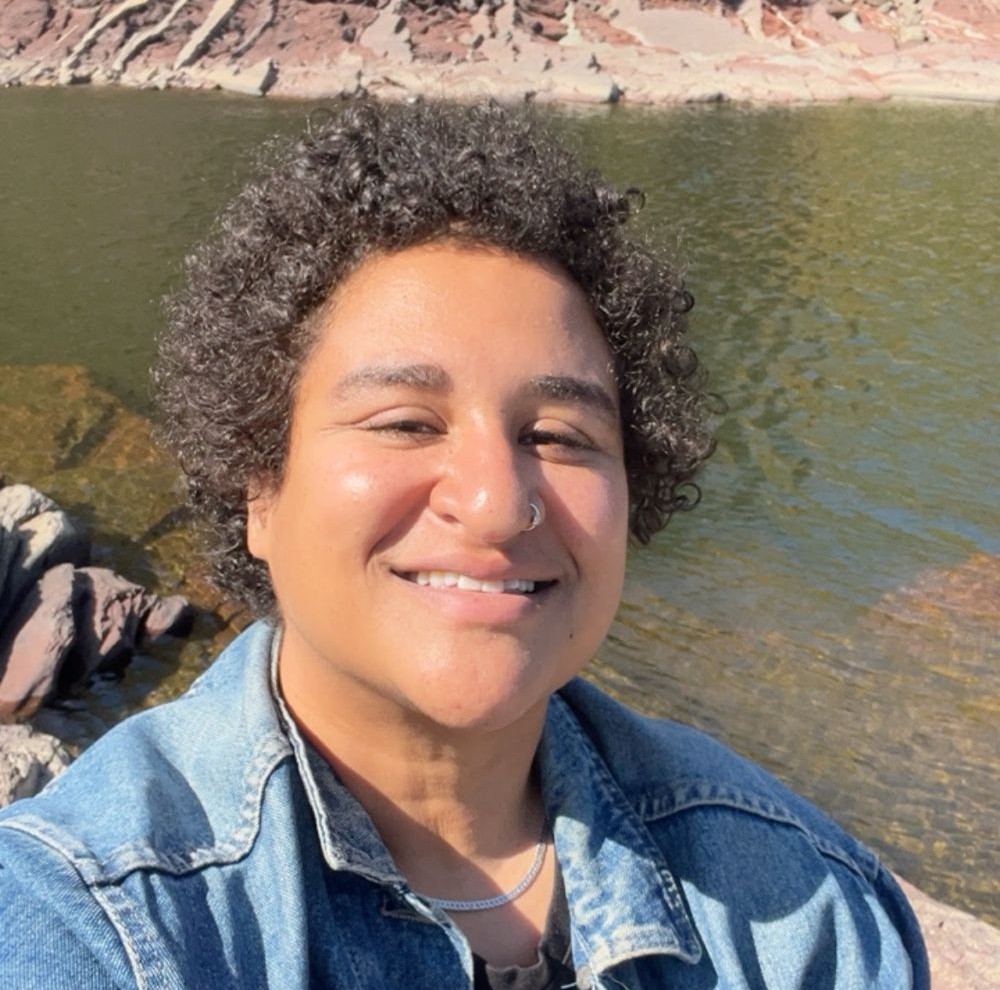
Black Eco Bloom (BEB) was founded in 2022 by Leïla Cantave and Tyjana Connolly, who served as its first Executive Director. I, Nat Alexander, was onboarded recently as Interim Executive Director.
What made you want to get involved?
I wanted to get involved because I have a deep passion for environmental and climate justice work. I believe it’s some of the most important work of our generation.
As Black women and gender diverse people, working in the climate justice field can be very isolating. So it’s very meaningful to create spaces where we can feel a sense of solidarity and mutual support.
Beyond professional development, connecting with nature and the environment is a way to recover traditional knowledge and ancestral memory. Environmental activism supports African and Caribbean communities to return to the practices that ground us and remind us that we belong. This collective work for the planet allows us not only to build relationships with each other but to develop skills that empower us and bring joy to our communities.
The climate and environmental justice movement spans many different disciplines and industries- from alternative energy and just transition to food and agriculture to physical, social and natural infrastructure, and more.
It’s very exciting to connect with such a diverse community of people united by our common passion for environmental justice.
What was the situation like when you started?
Despite being severely impacted by climate change, Black communities are frequently excluded from discussions and left out of efforts to develop solutions. BEB was formed out of a desire to address that exclusion by centreing the experience of Black women and gender diverse peoples.
There is still a long way to go to ensure that our voices are adequately represented on a global scale.
How has it changed since?
Since BEB’s founding, we have been able to grow a team of 10 volunteers and develop an infrastructure for moving forward as a movement.
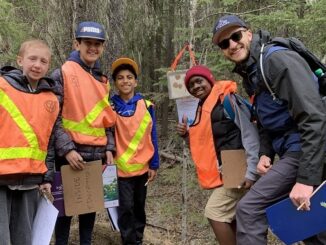
We’ve hosted an Eco-Leaders training program that introduced youth to environmentalism. We have a program called Roots of Wisdom, where we are creating a visual and literary resource to highlight ancestral, familial and generational knowledge. And we’ve been able to engage with the public by attending COP27 as an organization and hosting roundtables and community discussions.
We are looking to keep expanding our team and deliver meaningful programs.
What more needs to be done?
There is so much more that needs to be done to expand BEB’s network of support and influence. Black women and gender diverse people deserve spaces to come together, share wisdom, and grow together. We intend to develop a strong network across Canada.
Our community needs the opportunity to share all of its brilliance with the world. And the world needs us too.
How can our readers help?
Are you a Black woman or gender diverse person interested in connecting with like-minded people on topics of the environment? Are you passionate about the protection of land and waters, creating stronger intergenerational communities, and/or developing alternative solutions to climate catastrophe? Connect with us! Readers can reach out to us for collaborations and connections via our website, Instagram, or by email.
We also welcome community support in the form of partnership and donations from allied communities.
Do you have any events coming up?
Blooming without boundaries is an upcoming fellowship program where we offer mentorship to Black women and gender diverse aged 18–35 living in Mohkinstsis (Calgary) to become leaders in environmental and climate action.
We are looking for mentors for the program and fellows who want to learn and bloom together!
Where can we follow you?
Instagram | LinkedIn | Website