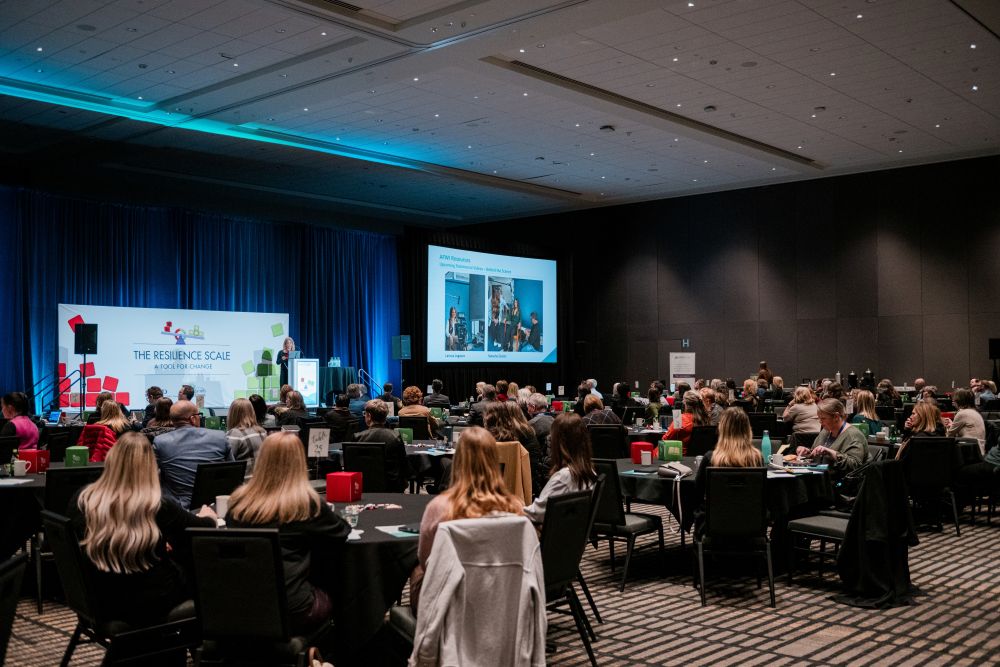
For nearly two decades, the Alberta Family Wellness Initiative has been working to close one of public health’s most persistent gaps: the distance between what science knows about how our brains develop and how our systems actually treat people. Housed within the Calgary-based Palix Foundation, AFWI translates complex neuroscience into a common language — built around six accessible metaphors known as the Brain Story, developed in partnership with Harvard University’s National Scientific Council on the Developing Child — and puts that language to work across health, education, child and family services, and justice. Now led by Scientific Director Dr. Victoria Meah, the initiative’s current focus is the Resilience Scale, a practical framework showing how adversity, supportive relationships, and individual skills and abilities interact to shape our capacity to adapt and thrive. The goal, as Dr. Meah puts it, is simple in ambition if not in execution: share the science with everyone, everywhere.
Describe your charity/non-profit/volunteer work in a few sentences.
The Palix Foundation is a private philanthropic organization based in Calgary that is dedicated to improving the health and well-being of individuals, families, and communities across Alberta and beyond. The Foundation’s flagship initiative, the Alberta Family Wellness Initiative (AFWI), works to align the science of brain development to policy and practice, and to support system-level change by applying this science across sectors — including health, education, child and family services, and justice.
What problem does it aim to solve?
Decades of scientific research show that our early experiences — including adversity, positive supports, and the development of skills and abilities — shape physical and mental health outcomes throughout our lives. However, there is a gap between what this science tells us and how systems actually operate. Sectors, programs, and services often work in fragmented ways that focus on treating symptoms rather than supporting the protective factors that impact health across the lifespan.
Our work aims to close that gap by creating a common knowledge and a common language focused on how our brains develop and how we build our capacity for resilience, which can be defined as our ability to adapt and stay healthy in the face of adversity. This common understanding supports next-generation models of treatment and prevention.
When did you start/join it?
The Alberta Family Wellness Initiative was officially launched in 2007. It is based on a strong body of scientific work called the Brain Story, which is a collection of six metaphors that help translate key aspects of brain development into language that can be understood by everyone. These metaphors were created in partnership with the National Scientific Council on the Developing Child at Harvard University and the FrameWorks Institute.
Over the years, AFWI has taken a “learn and adapt” approach to sharing these metaphors and the underlying science to the public. We’ve continued to evolve based on new research, real-world experience, and feedback from our community partners. Our current focus is sharing the Resilience Scale, a visual tool that shows how different factors — including experiencing adversity; having access to safe, stable, and supportive environments; and the skills and abilities that help us adapt to the world around us — work together to influence our capacity for resilience.
I have been with the Foundation for just over one year, and I want to acknowledge the many current and previous team members and partners who have contributed to this work since AFWI’s founding.
What made you want to get involved?
I was drawn to the opportunity to translate and apply science in a way that meaningfully impacts people’s lives. The AFWI is unique because it brings together different disciplines and sectors, turning complex science into practical action for individuals, organizations, and entire systems — something I felt was often missing in traditional academic roles, which was my previous career path.
What was the situation like when you started?
Like many complex challenges, this work keeps evolving as new information and community needs emerge. We stay focused on sharing the Brain Story and Resilience Scale with the public, the workforce, and policymakers — helping people move from understanding the science to putting it into practice in everyday settings.
How has it changed since?
We’ve seen the Brain Story and Resilience Scale Framework reach more people and make a bigger impact. Different sectors are starting to use a shared language, more people are applying our training and resources, and community organizations are working together more closely. There’s also growing interest in strengthening data and evaluation approaches by measuring outcomes in ways that reflect the Resilience Scale’s core ideas — showing adversity (“red boxes”), supportive relationships (“green boxes”), and skills and abilities (“purple fulcrum”).
What more needs to be done?
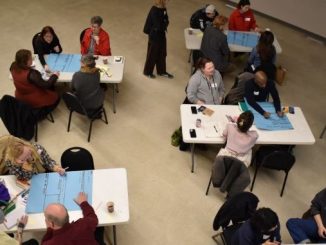
There is still work to do to achieve systems-wide change. Our priority is to share the science of the Brain Story and Resilience Scale to everyone, everywhere! We deliver our Resilience Scale Masterclass for free and are always happy to share this training opportunity with interested groups.
Another key focus for us right now is on developing free Resilience Scale trainings tailored for specific professions. We offer courses for nurses and physicians that are accredited by the Canadian Nurses Association and the Royal College of Physicians and Surgeons of Canada, respectively, and we also just released a course for law enforcement and public safety professionals in partnership with the Canadian Police Knowledge Network — we are working to share these with practitioners and frontline personnel across Canada.
How can our readers help? Building resilience is a collective, community effort. Readers can help by learning about the science of brain development through our free Resilience Scale Masterclass and other resources. We also encourage you to check out our website and video resources, like our Brains: Journey to Resilience video.
Readers can then apply this science in their own contexts — whether that’s in their workplace, community, or family — recognizing their role as a “green box” for others, and advocating for evidence-informed policies, programs, and practices that build resilience within our services and society.
Do you have any events coming up?
We regularly host free in-person and virtual Resilience Scale Masterclass training opportunities. We are planning an in-person Masterclass in Calgary in June. If you’d like to organize a Masterclass for your organization, or if you are interested in attending our June session, please reach out to contact@palixfoundation.org to book!
Where can we follow you?
You can learn more about the Alberta Family Wellness Initiative and access free resources and training on our website, and sign up to receive our newsletter there as well.
Facebook | Instagram | LinkedIn | YouTube