
Calgarians measure winter in months.
The city’s poker players measure it in hands. Every quadrant hides a standing game: a Tuesday table in Tuscany, a payday game in Forest Lawn, a retiree game in Acadia that has been dealing since before the Saddledome got its current name.
When the mercury drops past minus twenty and the Deerfoot turns into a slow-motion rumour, concerts get skipped and dinner reservations dissolve. The poker game meets anyway. It always has.
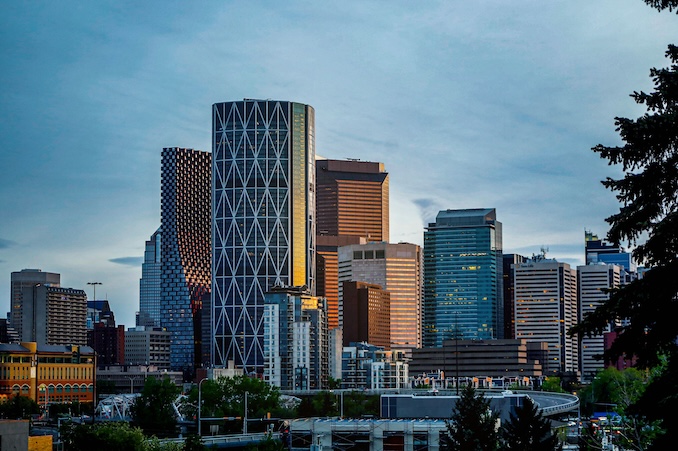
The game’s roots run under the whole province. Homesteaders survived their first prairie winters on whist and cribbage, and the ranch bunkhouses that followed dealt five-card stud by lamplight for matchsticks.
Poker outlasted every other parlour game here because it fits any headcount and pays the patient, which suits a city that spends five months a year waiting out the sky. What’s changed is the on-ramp. Most newer faces at Calgary tables learned the rules from an online poker school, phone in hand in a Beltline one-bedroom, drilling starting hands months before anyone offered them a real chair. The route into the game modernized. The game itself did not.
From whist drives to hold’em on the homestead
The lineage is longer than most Calgarians guess, and poker sits at the end of it like the last player left in the hand.
Bunkhouse stud and church-basement stakes
Homestead families east and south of the city played whist at fundraising drives because the church approved, and played stud poker in the bunkhouse because the foreman didn’t check.
Ranch hands dealt five-card stud through entire Februaries, betting matchsticks and pipe tobacco, arguing rules that varied ranch to ranch. When those families moved into the city for oil-patch work, the poker habit came with them.
A few of the scrap-lumber card tables they built are still holding chips in Fairview basements, which tells you how seriously the game got handed down.
Nickel-ante poker in the rumpus room
Post-war bungalows in Capitol Hill and Bowness finally gave the game a room of its own. Nickel-ante dealer’s choice ran under hanging lamps every payday weekend, with kids counting the laughter from the top of the stairs.
Then the televised hold’em boom of the mid-2000s reached those same basements and rewrote the format overnight: suddenly every dealer called no-limit hold’em, the blinds doubled on a kitchen timer, and somebody’s brother-in-law printed a payout sheet like the whole thing was sanctioned. The stakes stayed small. The seriousness did not.
Why poker owns Calgary’s deep-winter calendar
Plenty of games can fill an evening. Poker is the one that keeps getting the deep-winter slot at Calgary tables, and the reasons are practical rather than romantic.
This city does its best socializing in small rooms. The music scene proves it nightly, with local artists building an audience one small venue at a time, and the poker night is the card-table expression of the same instinct: nine seats, one pot, nobody shouting over a PA. A city that would rather host eight people than join eight hundred was always going to keep poker alive.
The game’s mechanics do the rest:
- A poker table runs three-handed or nine-handed without complaint, which matters in a city where attendance hinges on the evening road report
- The betting hands competitive players a puzzle every two minutes, while the shuffle hands everyone else a minute to actually talk
- A patient newcomer can turn respectable at hold’em inside a single winter, which the dusty basement guitar cannot promise
- A full poker night costs a twenty-dollar buy-in and whatever’s in the fridge, which beats what any night out runs a family right now
That last point lands harder every year. The kitchen-table game may be the best entertainment value left in the city, and Calgarians have never needed telling twice about value.
The Tuesday poker game through boom and bust
This is a city that gets hired and laid off in waves, and the poker table has ridden out every one of them. The early-eighties bust emptied towers downtown.
The 2015 downturn did it again, and anybody who worked in the core then remembers the going-away lunches. Houses sold, crews scattered, half the crescent turned over. The Tuesday poker game kept dealing.
There’s a game in Ranchlands that has outlived three employers, one divorce and a move across the city, and its only unbroken rule is the 7:30 shuffle.
Calgary is less a city of institutions than a city of standing appointments, and a poker game is the cheapest appointment going. It asks almost nothing: show up with your buy-in, take your ribbing, deal when it’s your turn, and text the table if the roads are bad.
Stakes, session clocks and the online poker winter
The modern Calgary game carries an online annex, because some weeks the weather wins the scheduling fight even when it can’t kill the appetite for cards.
When the poker game can’t get down the driveway
On the nights nobody can host, the crew keeps a hand in from the couch. Some settle comfortably into real money poker at stakes they pick themselves, usually softer than anything on the kitchen table. The more organized groups go further and book a private online table on GGPoker, so a snowed-out Tuesday convenes anyway with the same faces and the same needle.
The room has the traffic to back the habit. Trackers that monitor online poker counted more than thirteen thousand simultaneous cash-game players there in the winter of 2026, the busiest tables anywhere on the internet, and its app deals upright in portrait, playable with a single thumb from under a blanket while the wind does its worst outside.
Even the World Series of Poker deals bracelet events online through the same lobby now, which means the fanciest hardware in the game is technically reachable from a couch in Citadel.
House rules for hold’em, written down
The long-running games run their poker the way this city runs its backcountry weekends: the plan gets made in the kitchen, not the parking lot. The whole code fits on an index card:
- Size the buy-in so a lost night costs less than the pizza
- Set your limits before the first shuffle, not during a renegotiation at eleven
- Give the game a hard end time that survives anyone’s hot streak
- Never let a bad afternoon talk you into a looser evening at the table
The Responsible Gambling Council publishes guidance along these exact lines, and veteran home games have enforced it culturally for generations without calling it policy.
The online rooms now build the card into the product: GGPoker operates under UK Gambling Commission and Isle of Man licences with an independently certified shuffle, and the deposit caps and session clocks you set on your account hold firm on a good night and a bad one alike. The index card, digitized, and harder to ignore than the one under the Flames magnet.
The strictest players at any local table are usually the hosts with the longest tenure. The one who has dealt the same game since the Flames’ last deep playoff run is invariably the first to cap the rebuy and call last hand, which looks like caution until you realize it’s the reason the game still exists.
The forecast has never beaten a full poker table
There’s a chinook word for what a poker night does to a Calgary week: it breaks the pressure. Three hours of cards, a few dollars migrating around the felt, the same three bluff stories retold and improved, and the drive home at minus twenty sits lighter than the drive over.
The weather will do what it does. Environment Canada will promise a warm front, the arch will pose over the mountains like a painted backdrop, and by Thursday the block heaters will be humming again. None of it touches a standing game.
Somewhere in your circle is a player who has waited all season for someone else to suggest poker, chips already in the closet, shuffle already learned from a parent in a bungalow that’s since become an infill. Be the one who says it. Calgary winters are long, but no cold snap has ever beaten a full table.