
Open Arms is a non-profit organization dedicated to providing free, unbiased health advocacy services. It helps patients and their families better understand and navigate the healthcare system while ensuring their voices are heard. We connected with Emma Elder, Board Chair of Open Arms, to discuss her path into advocacy, the organization’s impact across Alberta, and its commitment to supporting patients in accessing necessary care.
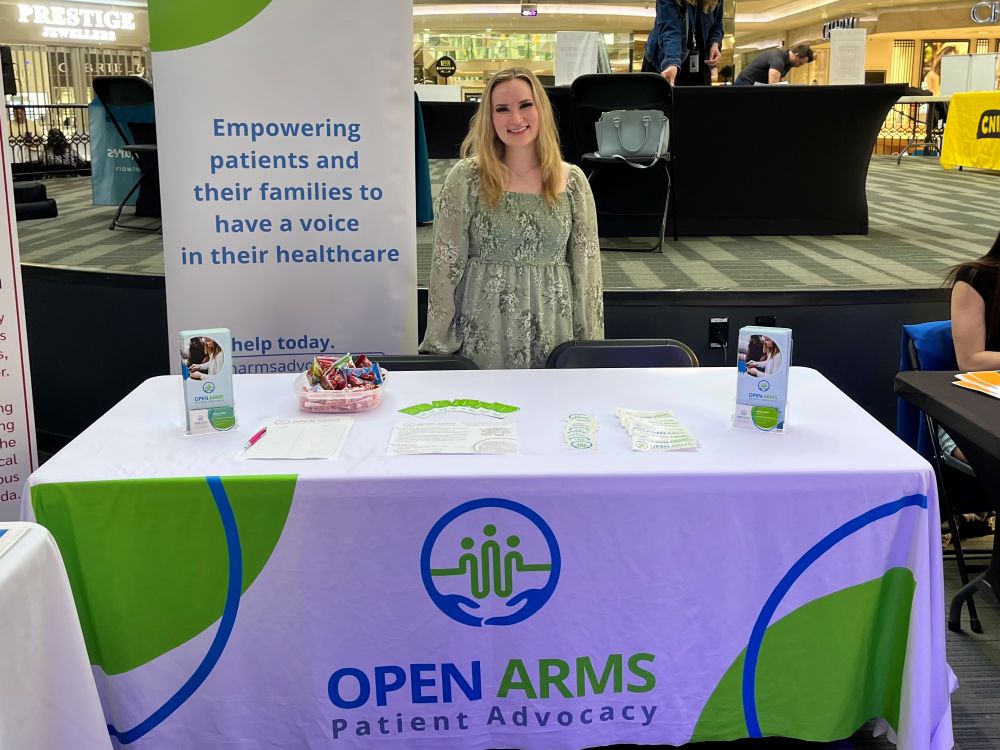
Describe your charity/non-profit/volunteer work in a few sentences.
Open Arms provides free, impartial health advocacy services across Alberta. We empower patients and their families to have a voice in their healthcare by helping them develop the knowledge and confidence to navigate the system effectively. Founded in 2007, our mission is to ensure that no patient feels unheard and every Albertan can access to the care they deserve. Our volunteer advocates assist with a variety of healthcare challenges, including system navigation, hospital concerns, senior care, misdiagnoses, acute care, mental health, and more.
What problem does it aim to solve?
We envision a healthcare system where every Albertan has the support, knowledge, and confidence to self-advocate for their health and can receive access to barrier-free care. Our patient advocates:
– Provide compassionate, confidential advice and guidance based on goals set by the patient
– Guide individuals in navigating the healthcare system, including support with complaints, documentation requests, and seeking second opinions
– Facilitate clear, productive communication between patients and healthcare professionals
Empower patients to self-advocate by offering providing personalized resources and strategies to meet their health needs
When did you start/join it?
I joined the Board of Directors as Treasurer in early 2023 and was elected Board Chair the following year.
What made you want to get involved?
At age 17, I became an advocate for my mom after she was unexpectedly diagnosed with idiopathic pericarditis. She was facing a lot of uncertainty surrounding the condition and its treatment, often leaving cardiology appointments with more questions than answers. During the initial flare, she was in so much pain that it was difficult to advocate for herself or know what questions to ask. The doctors didn’t know why it had happened, and treatment options weren’t clearly explained, so I stepped in. I began researching the condition and treatment options on my own and came to future appointments prepared with questions for the care team.
That experience was my first introduction to patient advocacy, and I began to appreciate how overwhelming it can be to navigate an illness alone. Many patients aren’t fortunate enough to have a persistent and medically inclined loved one to support them. When I discovered Open Arms, I felt an immediate relief knowing an organization existed to provide this kind of support free of charge. I applied to volunteer without hesitation, and it’s been an exhausting but incredibly rewarding journey.
What was the situation like when you started?
Open Arms was founded because of a shared passion for healthcare supports and ensuring that no patient struggles alone. When I joined the board, the organization was filled with passionate volunteers, but we lacked clear structure and leadership. It can be challenging to guide an organization with such a broad mission while operating almost entirely on volunteer capacity.
By the end of 2023, demand for advocacy had grown so significantly that we had to implement a waitlist for patients seeking support. At the same time, we were seeing firsthand the systemic barriers patients face, from wait times to gaps in services to poor access to home care supports. While we can’t solve every structural issue within the healthcare system, we work hard to ensure patients feel supported and empowered while navigating it.
How has it changed since?
Our team has grown significantly over the past three years, and we now have 18 volunteer advocates across the province working with patients to achieve their health goals. In recent years, we have reached over 250 patients annually, and in 2025, we saw a 45% increase in demand for our services. Open Arms has become a key referral partner for organizations such as AHS Patient Relations and the Office of the Health Advocate when patients are seeking independent advocacy support.
What more needs to be done?
Three things come to mind:
1. We continue to see major gaps within certain areas of the healthcare system, particularly in accessible mental health care, health record retrieval and correction, and assisted living supports. As an advocacy organization, we work with like-minded individuals and groups to help address these gaps, but meaningful change ultimately requires systemic solutions.
2. Funding has become a top priority. Demand for our services continues to rise, and while we remain committed to providing free support to patients, we are beginning to feel the financial strain.
3. I often hear Open Arms described as a “hidden healthcare gem” in Alberta. I would love to see that change – too many patients are struggling without knowing that accessible supports exist.
How can our readers help?
We are always looking to build partnerships with organizations and individuals within the healthcare space. Community members with professional skills, lived experience, or knowledge they’d like to share are encouraged to connect with us!
Readers can also support our work by becoming a member. For $20 per year, members gain access to advocacy workshops, training sessions, and educational opportunities covering a wide range of health topics. Membership funds help us train volunteer advocates, develop new patient resources, and support program operations so that our advocacy services can remain free for those who need them most. More information can be found here.
Where can we follow you?
Instagram | Facebook | LinkedIn | Website
PAY IT FORWARD: What is an awesome local charity that you love?
Minds Over Matter, a non-profit offering barrier-free counselling for individuals aged 18-35 with an income of $35 000 or less.